
You might notice a neighbor’s quiet porch as you unwind with Five CBD’s Full-Spectrum Pick designed for nightly wind-down. If you’re dealing with restless evenings, you’re not alone—stress from the day can tug at your sleep and make it hard to settle in. This product is built to work with you, using a blend of cannabinoids and terpenes to help ease tension without tipping you into daytime grogginess.
You’ll explore how linalool and myrcene, along with trace cannabinoids, can support a smoother path to sleep and a calmer mind. It’s about the entourage effect, but it’s also about dialing in a routine and a careful dose that fits your evenings. If you’re curious whether this might be your help-yourself-to-sleep tool, read on and consider how it could become part of your nightly wind-down.
Key Points
- Full-spectrum Five CBD products blend cannabinoids, terpenes, and flavonoids to support nightly calm and sleep onset without daytime impairment.
- Look for blends with terpenes like linalool, myrcene, and caryophyllene, which modulate stress and sleep onset pathways.
- Choose formulations with transparent third-party testing and standardized terpene content for reliable evening use.
- Start with a low, fixed dose and pair with a consistent bedtime routine to gauge individual sleep response.
- Expect modest sleep improvements within 1–2 weeks, with more meaningful gains after several weeks of consistent use.
Understanding Full-Spectrum Benefits for Nighttime Use
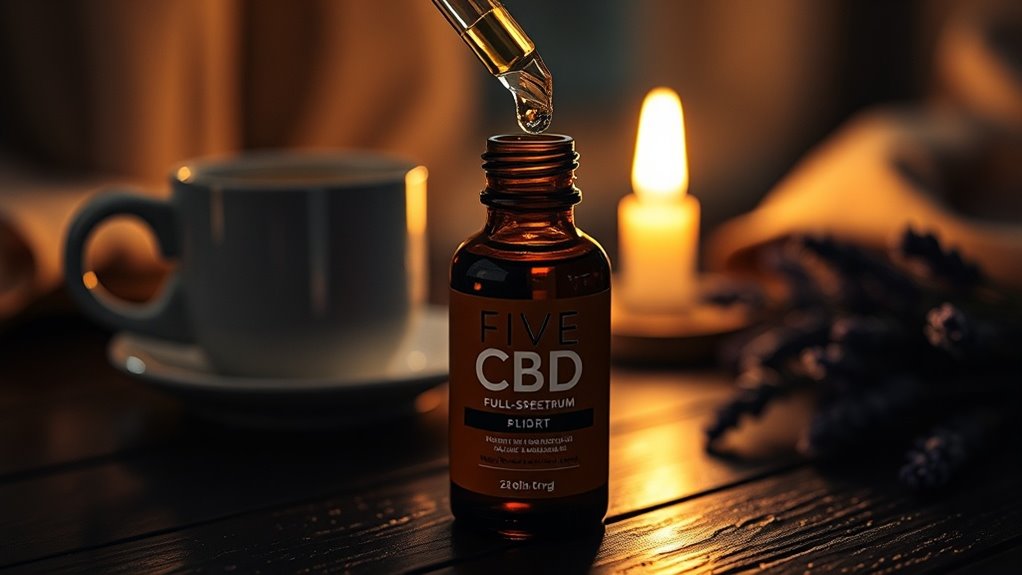
Full-spectrum CBD products leverage a range of cannabinoids, terpenes, and flavonoids that work together to support nighttime calm and sleep quality. You’ll encounter evidence suggesting synergy can influence sleep onset through multi-target effects on endocannabinoid signaling, GABA activity, and inflammatory mediators. While single-ingredient cannabinoids may alter sleep parameters, full-spectrum formulations aim for a balanced profile that may reduce sleep latency and promote continuity without causing significant daytime impairment. You should note that results vary by product, dose, and individual physiology. In practical terms, monitoring personal response helps determine suitability for nightly use. Be mindful that reported experiences can include changes in dream vividness, which may not reflect universal outcomes and should be interpreted cautiously.
How Terpenes Contribute to Relaxation and Sleep
Terpenes, the aromatic compounds in cannabis and many botanicals, contribute to relaxation and sleep by modulating neural activity and signaling pathways. In practical terms, this means you may experience changes in anxiolytic tone, autonomic balance, and cortical arousal through selective receptor interactions and downstream neurotransmitter effects. Terpene perfomance varies by structure, concentration, and context, influencing how quickly you drift toward rest and how deeply you relax. Evidence supports roles for certain terpenes in reducing sleep onset latency and increasing non-REM sleep, while maintaining safety profiles similar to other botanical modulators. When evaluating products, consider terpene profiles alongside cannabinoids to better align with your sleep chemistry and target nightly wind-down goals. Keep expectations grounded in clinical data and product transparency.
The Entourage Effect: Why Blends Work Better for Wind-Down
You’ll see how the entourage effect—where CBD, other cannabinoids, and terpenes work together—can enhance overall calm and sleep support. Blends may offer more consistent night-time balance by leveraging synergistic interactions identified in current research. This discussion centers on Entourage Synergy Benefits and Blends for Night-Time Balance as foundational concepts.
Entourage Synergy Benefits
How does the entourage effect explain why blends can outperform isolated compounds for wind-down? In full-spectrum formulations, you’re exposed to multiple cannabinoids, terpenes, and minor phytochemicals that interact additively or synergistically. This entourage synergy can modulate receptor activity and metabolic pathways, potentially enhancing anxiolytic and sleep-support effects while reducing resistance from single-c compound tolerance. Evidence from observational and pharmacological studies suggests that whole-plant or full spectrum benefits arise from combined mechanisms, including fine-tuned inflammatory modulation and endocannabinoid tone support. You’ll often notice steadier sleep onset and smoother recovery with blends, as diverse constituents may target different aspects of the sleep-wake cycle. Emphasize product labeling that reflects a broad phytochemical profile to capitalize on entourage synergy.
Blends for Night-Time Balance
Blends designed for night-time balance leverage the entourage effect to support a smoother wind-down by combining multiple cannabinoids, terpenes, and other phytochemicals. You’ll often see carefully balanced ratios that aim to enhance relaxation without sedation, supported by research on combined phytochemicals rather than single compounds. In practice, these blends emphasize complementary terpenes like linalool, myrcene, and caryophyllene, which may modulate signaling pathways linked to stress and sleep onset. The goal is a predictable, tolerable effect aligned with evidence on sleep quality and next-day alertness. Use with calming rituals and consistent bedtime routines to maximize potential benefits. Always review product certificates and labeling to ensure transparent cannabinoid profiles and standardized terpene content for reliable outcomes.
Choosing the Right Cannabinoid Profile for Sleep Support

Choosing the right cannabinoid profile for sleep support depends on how each compound interacts with your body’s endocannabinoid system and natural sleep rhythms. When selecting a full-spectrum option, prioritize profiles with terpenes and minor cannabinoids that research links to sleep onset and restfulness, rather than just high THC or CBD levels. Evidence suggests that combinations like CBD with trace THC, CBN, or certain terpenes (linalool, myrcene) may influence sleep onset timing and perceived sleep depth, though results vary by individual. Consider dosing that minimizes awakenings and avoids overstimulation. Dream recall, while not the primary goal, can be influenced by sleep stage distribution and REM patterns, which are affected by cannabinoid balance. Base choices on clinical data, product transparency, and personal response tests.
The Role of CBD in Calming Tension Without Sedation
You’ll explore how CBD can promote calming tension without causing sedation, supporting an awake but less anxious state. Evidence suggests CBD may reduce muscle tension and perceived stress through non-sedative pathways, aligning with “Calming Yet Awake” and natural tension relief. This sets the stage for practical considerations on using full-spectrum blends for Sleep-Friendly Tension Reduction.
Calming Yet Awake
CBD can calm tension without clouding alertness by engaging the body’s endocannabinoid system in a way that supports steady, wakeful relaxation rather than sedation. You’ll find that full-spectrum formulations may modulate anxiety-related signals while preserving cognitive clarity. Research indicates cannabinoids interact with CB1 and CB2 receptors to reduce hyperarousal without suppressing alertness, potentially supporting calmer focus during daily tasks and evening routines. In practice, a measured dose can help you sustain attention, yet disengage excessive rumination. The concept of calming focus aligns with a state where nervous energy is dampened, not erased, enabling consistent performance and sleep readiness. Pairing CBD with a stable daily routine may contribute to a healthier nightly mood without compromising wakeful functioning. Consider product quality, standardized dosages, and personal response.
Tension Relief Naturally
Tension relief can be achieved without sedating side effects when CBD modulates the body’s stress response. You’ll find that full-spectrum CBD acts on receptors involved in anxiety and autonomic regulation, potentially reducing perceived tension without impairing wakeful function. Evidence suggests improvements in markers of stress reactivity and subjective calm, especially when paired with consistent routines. You may notice diminished muscle tension and steadier breathing during periods of daily stress, supporting a steadier baseline before bedtime habits. Use of CBD should align with individual biology and product quality, avoiding high-THC levels or inconsistent sourcing. Integrate calm rituals and predictable dosing into your day, enabling dream friendly evenings while maintaining alertness for daytime activities. Always review product labels and consult professionals for personalized guidance.
Sleep-Friendly Tension Reduction
Even when winding down, you don’t have to sacrifice alertness for relief from tension. CBD aims to reduce muscle and nerves’ excitability without inducing sedation, supporting a calmer baseline during evening activities. Evidence suggests full-spectrum extracts may engage endocannabinoid and GABAergic pathways, potentially lowering perceptual stress and perceived stiffness without heavy sleepiness. For many, this translates to smoother transition into rest with stable cognitive function. Practical use involves timing that aligns with routines rather than abrupt changes; consider how reduction scheduling can harmonize with daily rhythms. In your midnights routines, monitor response to dose and adjust to avoid residual residual tension that could disrupt sleep onset. If used consistently, CBD may promote quieter physical tension while preserving daytime clarity.
Nightly Routine: A Step-by-Step Wind-Down Plan

A practical nightly wind-down plan combines predictable routines with evidence-based steps to enhance sleep quality. You’ll structure the hour before bed to minimize sleep-disrupting activities and maximize restorative processes. Begin with a fixed bedtime, then engage in a calming, end-of-day ritual that signals transition from wakefulness to rest. Limit screen exposure and bright lighting at least 60 minutes pre-sleep; replace with dim settings and low-stimulation activities. Incorporate light stretching, relaxation breathing, or a brief mindfulness practice to reduce physiological arousal. Your nighttime routine should prioritize a cool, dark, quiet sleep environment and consistent awakenings. Maintain regular caffeine and alcohol boundaries and avoid large meals late. Track subjective sleep quality to refine timing, ensuring you create a reliable, repeatable wind-down that supports restorative sleep. Calming tension should gradually decrease through predictable, evidence-based steps.
Practical Tips for Incorporating Hemp-Derived Products Into Your Evening
Consider how hemp-derived products can fit into your evening routine without disrupting sleep. You’ll want to align product choice, timing, and dosage with documented patterns and personal response. Start with low doses and predictable schedules, then assess impact on sleep onset and quality over several days. Use products that specify full-spectrum extracts and third-party testing to support reproducible effects. Pair hemp products with a consistent bedtime routine to minimize arousal and optimize wind-down cues. Monitor interactions with other supplements or medications, and prefer non-stimulating formulations in the evening. Remember, hemp aromas and flavor can affect tolerance and enjoyment, so select unobtrusive options when first trying them.
1) Choose tested, full-spectrum formulas
2) Start with small, fixed doses
3) Integrate into a calm bedtime routine
What to Expect: Realistic Sleep Improvement Timelines
What kind of timeline can you realistically expect when using hemp-derived products for sleep? In short, most users notice modest improvements within 1–2 weeks, with more meaningful gains after several weeks of consistent use. Effects vary by product type, dosage, and individual physiology, but sleep timing tends to improve gradually as you establish routine and tolerability. Expect gradual reductions in bedtime variability, shorter time to fall asleep, and fewer awakenings through the night; these changes often align with steady CBD metabolism and sustained plasma levels. Peak benefit typically correlates with regular nightly dosing rather than sporadic use. If you track sleep quality over 2–4 weeks, you’ll better assess whether the full-spectrum formulation supports your goals, while remaining mindful of potential daily fluctuations.
Safety Considerations and Personal Tacing of Dosing
Safety considerations are essential when using full-spectrum CBD for sleep, and personal titration should be guided by careful observation of effects, potential interactions, and tolerability. You adjust gradually to align with sleep timing and ensure dosage precision, minimizing next‑day grogginess and tolerance buildup.
- Monitor for interactions with medications or supplements, especially sedatives, and adjust use if you notice adverse effects or altered sleep quality.
- Start with the lowest effective dose, then incrementally refine timing and amount to match your nightly wind‑down without overshooting.
- Maintain consistent routines and document outcomes to support objective decisions about titration and potential needs for professional guidance.
Measuring Results: How to Tell If It’s Working for You
You can start by noting your personal calm signals, such as easier daytime tension and fewer irritations, as you begin taking the full-spectrum CBD product. Track sleep quality changes over a consistent period, including sleep onset, awakenings, and perceived restfulness, to see patterns. If you observe meaningful shifts in these areas, they may indicate the product is producing the intended nightly wind-down effects.
Personal Calm Signals
Personal calm signals are you can track to gauge CBD effectiveness over the night. You can monitor objective, simple indicators aligned with calm signals and routine consistency in your night routines. Use a brief checklist each evening to minimize bias and maximize comparability.
1) Heart rate variability and perceived ease of settling before bedtime.
2) Breathing cadence and silent mind moments during winding-down periods.
3) Sleep onset timing consistency and duration relative to baseline norms.
Collect signals for several nights, compare against your baseline, and note any steady shifts. Prioritize consistent timing, minimal awakenings, and subjective stillness during calm periods. Document changes in daily interference, mood stability, and task persistence after evening activities. If signals trend positively, you’re seeing a measurable effect within your night routines. If not, re-evaluate dosing timing or formulation.
Sleep Quality Changes
Sleep quality changes reflect how nightly CBD dosing interacts with your sleep architecture after establishing personal calm signals. You assess effects by tracking objective sleep timing, duration, and awakenings, alongside subjective reports of restfulness. Compare baseline nights to subsequent dosing periods, noting any shifts in sleep onset latency or total sleep time. CBD’s influence appears variable across individuals, with some reporting steadier sleep cycles and fewer nocturnal awakenings, while others describe unchanged patterns. Dream recall may increase or decrease, reflecting altered REM intensity or timing rather than universal improvement. Use consistent methods: maintain a fixed bedtime, monitor nightly dream reports, and document daytime fatigue. If results plateau or worsen, reassess dose, product quality, and potential interactions with other nocturnal routines.
Common Questions
How Long Before Bedtime Does Full-Spectrum CBD Start Working?
Full-spectrum CBD typically begins to affect you within 30 to 90 minutes after ingestion, though individual factors like your metabolism, dosage, and whether you take it with food can shift timing. For sleep optimization, many find effects during evening routines help ease winding down. Keep consistency and monitor how you respond. If you’re targeting a nightly routine, a session about 30–60 minutes before bed is a practical starting point for evaluating impact on sleep quality.
Can CBD Cause Morning Grogginess or Sleep Inertia?
CBD can cause morning grogginess in some people, but it isn’t universal. You might notice mild sleep inertia if you take it too late or at higher doses. Evidence suggests full-spectrum CBD can interact with sleep stages, yet most users report clear mornings; effects vary by dose, tolerance, and individual biology. If you experience CBD morning grogginess, adjust timing or dose. Monitor sleep quality, avoid daytime drowsiness, and consult a clinician if symptoms persist.
Will CBD Interact With Prescription Sleep Aids or Medications?
Cbd can interact with prescription sleep aids, so you should approach use cautiously. Evidence suggests potential pharmacokinetic interactions via liver enzymes (CYP450), which may alter drug levels. You should consult your clinician before combining cbd and prescription medications. Sleep aid compatibility varies by drug, dose, and individual metabolism. Do not stop meds abruptly. If you’re considering cbd, start with a low dose and monitor for side effects, coordinating any changes with your healthcare provider.
Do Terpenes Affect How CBD Helps With Sleep?
Terpenes can influence how CBD affects sleep by modulating receptor activity and brain signaling, potentially enhancing relaxation. This terpene synergy may help you fall asleep faster and feel more rested. However, evidence is mixed and effects vary between individuals. Consider how CBD products affect your sleep architecture, noting changes in REM and deep sleep stages. Start with low doses, monitor results, and adjust. Always verify product labels for terpene content and consult a clinician if you have concerns.
Is Nightly CBD Use Safe for Those With Anxiety Disorders?
Nightly CBD use can be safe for some people with anxiety disorders, but it isn’t universal. You should consult a clinician and start with a low dose, monitoring effects closely. CBD may interact with certain medications and could cause drowsiness or GI upset in some individuals. Prioritize anxiety management with evidence-based strategies and optimize your sleep environment to support sleep quality alongside any CBD use.
All Together
If you’re seeking a night routine that supports calm without weighing you down, you’ve got a smart option in full-spectrum blends like Five CBD’s nightly pick. You can trust that the entourage of terpenes and trace cannabinoids works together to ease you toward sleep and restore balance, without turning your evening into a sedative slump. You have the power to track your dose, refine your routine, and notice how small adjustments lead to steadier, more predictable nights where you wake up feeling refreshed and ready.
Now is the moment to take action. You deserve to feel more in control of your energy, mood, and confidence as you wind down each day. Commit to a simple, consistent nightly plan, pay attention to how your body responds, and use the data to guide your choices. Take the next step toward better health and a calmer, more energized you—today.